Latent Motifs
On how the motivation behind our artistic ideas is always hiding in plain sight.

There is a famous passage in Rilke’s The Notebooks of Malte Laurids Brigge, the fictional diary of a struggling Danish poet, that describes the way artistic creation draws from a reservoir of accumulated experience:
(…) “And it is not yet enough to have memories. One must be able to forget them when they are many, and one must have the great patience to wait until they return. For the memories themselves are not enough. Only when they have become blood within us, gesture and gaze, nameless and no longer distinguishable from ourselves, only then can it happen that in a very rare hour the first word of a poem arises among them and proceeds from them.”
Few descriptions of the creative process have proven as enduring. Rilke suggests that the experiences that ultimately nourish artistic work are not those we consciously preserve, but those that become so deeply integrated into our being that they cease to appear as memories at all. They become part of our way of seeing, feeling, and moving through the world.
I find myself in agreement with Rilke, but only up to a point. From a twenty-first-century perspective, shaped by habits of self-analysis and critical inquiry, it no longer seems sufficient to allow those experiences to operate invisibly. If our memories, attachments, and formative environments become “blood within us,” then it is worth asking why they do. What values, desires, identifications, and blind spots do they contain? Why do certain experiences persist while others fade? Why do some seemingly ordinary aspects of our lives continue to exert such a powerful pull on our imagination?
The challenge, then, is not merely to wait for those experiences to resurface as artistic material, but to learn how to recognize them in the first place. How does one identify the hidden reservoir from which one’s work emerges? How do we become aware of those motifs that have been present all along—neither secret nor forgotten, but so familiar that they have remained invisible?
Perhaps a useful way to think about this problem is through the concept of “weak ties,” a term coined by sociologist Mark Granovetter in 1973 and later adopted by psychologists. Weak ties are individuals who, in contrast to close friends and family—our “strong ties”—are distant contacts and near-strangers whom we nonetheless encounter on a regular basis. A weak tie might be your local grocer or dry cleaner, a neighbor you see occasionally, or a friend of a friend you meet at openings but with whom you do not have a close relationship. Psychologist Gillian Sandstrom has further developed this concept, showing how repeated interactions with acquaintances, store clerks, baristas, crossing guards, and others we do not know intimately can nonetheless contribute significantly to well-being, belonging, and social connectedness.
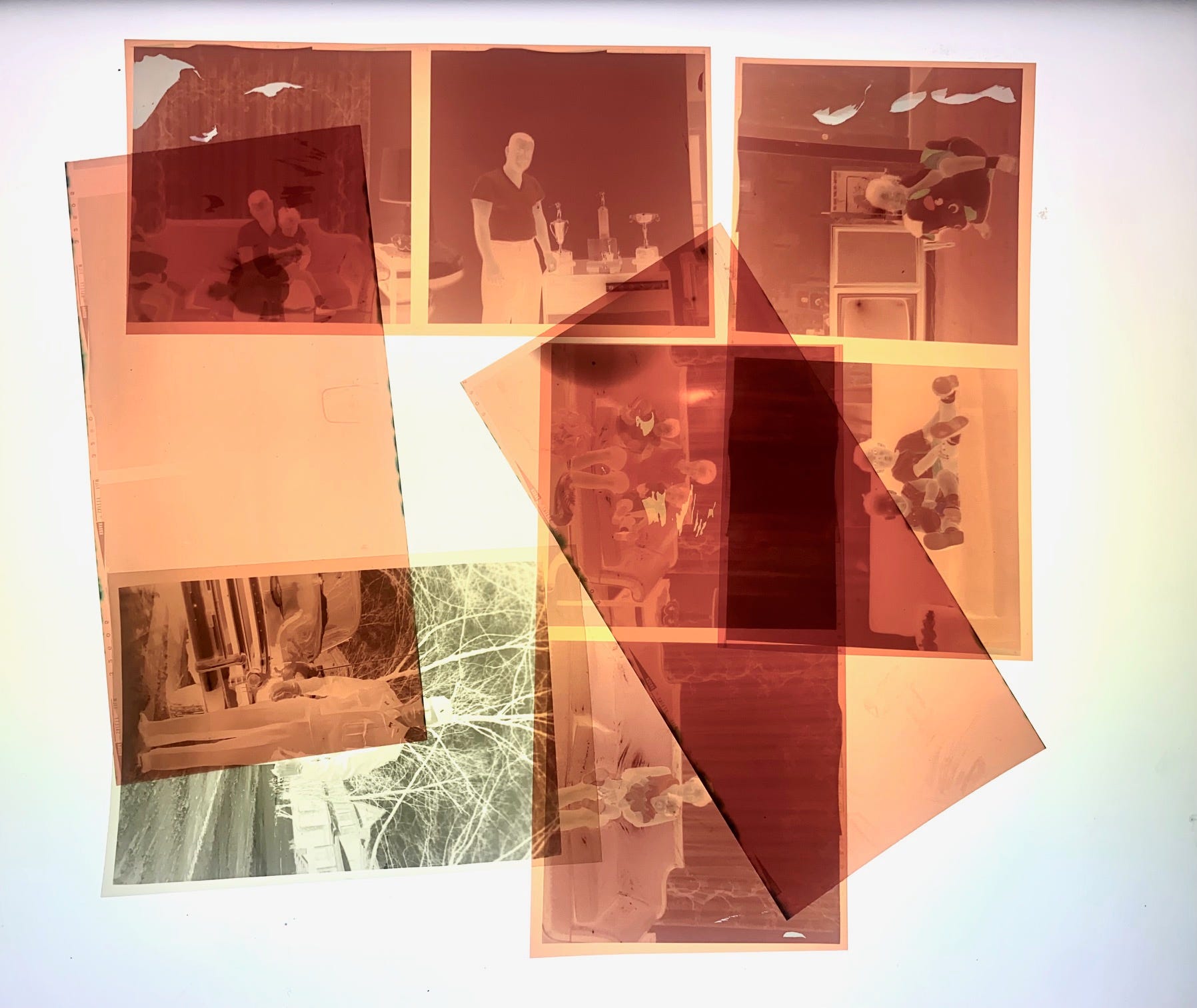
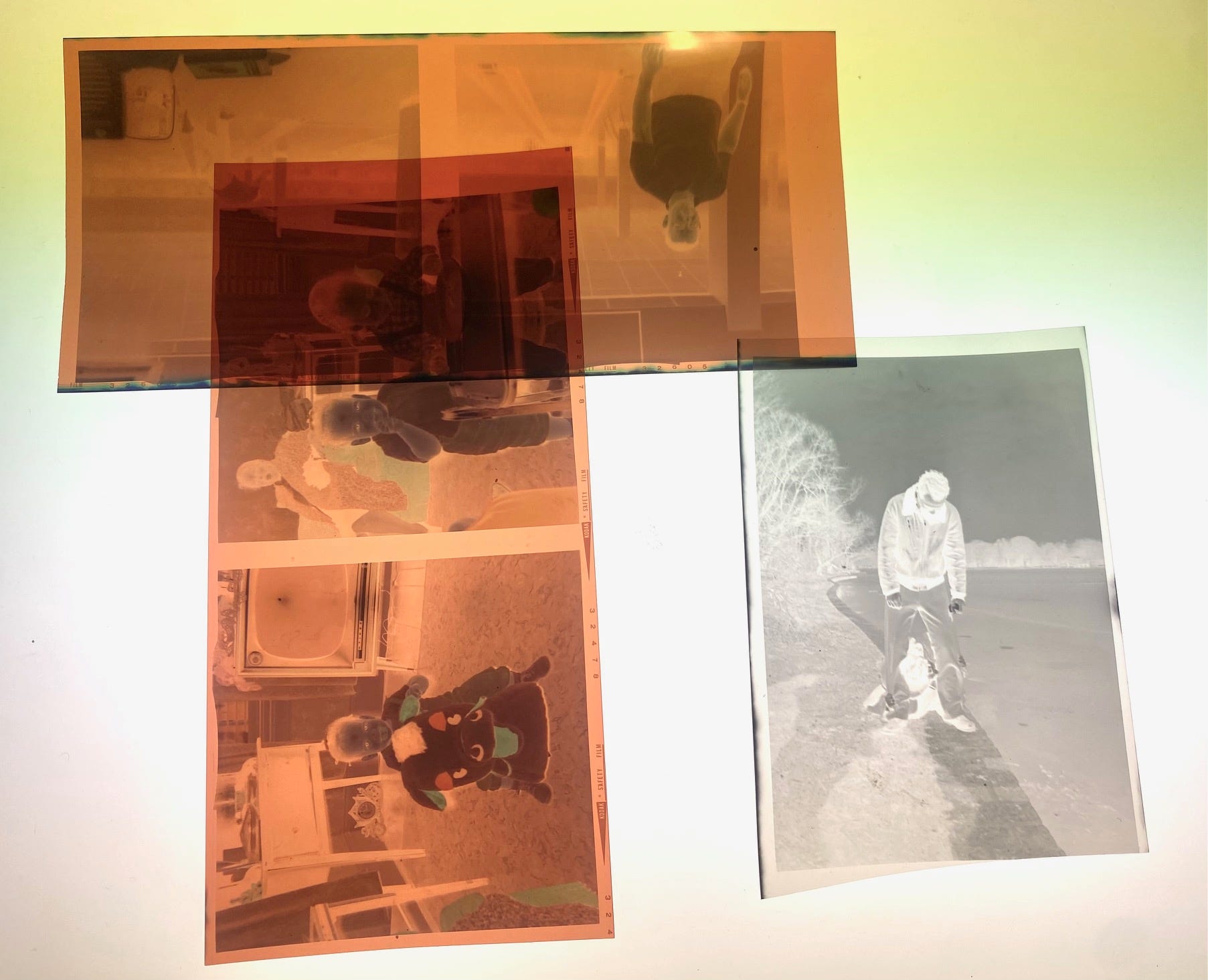
What I have been thinking about recently is that the experiences embedded in our bodies may constitute their own form of weak ties. These are usually not the major events that dominate the landscape of a life—love, death, personal tragedy—but rather the ordinary, hidden-in-plain-sight patterns that, like a strip of negative film, remain difficult to read until someone points them out to us and help us “develop” it in our mind. They may also be things we do without considering them artistic until, one day, we recognize their creative potential. These, I would suggest, are latent motifs.
Cindy Sherman, Doll Clothes (1975) animation, 2’24”
A latent motif can take many forms: a memory, a habit, a skill, a place, or even a recurring social encounter whose significance becomes visible only in retrospect.
Latent motifs are the weak ties we maintain with our earlier selves. They remain dormant for years, sometimes decades, until a particular encounter reveals their significance and transforms them into artistic material. Cindy Sherman has acknowledged that playing dress-up and with dolls in childhood may have informed her lifelong interest in self-transformation as an artistic medium. “It was a guilty pleasure to invent these characters,” she recalled, “because it allowed me to play around with makeup and the sexier, old-fashioned styles of dressing that I wouldn’t dare have worn.”
In a different but related way, Alison Knowles recognized a latent motif in her fascination with repetition and structure. According to the artist, The Identical Lunch originated when fellow Fluxus artist Philip Corner noticed that she always prepared the same meal for lunch: a tuna sandwich on wheat toast with lettuce and butter, accompanied by soup or buttermilk. Inspired by the observation, Knowles transformed the habit into an artwork.
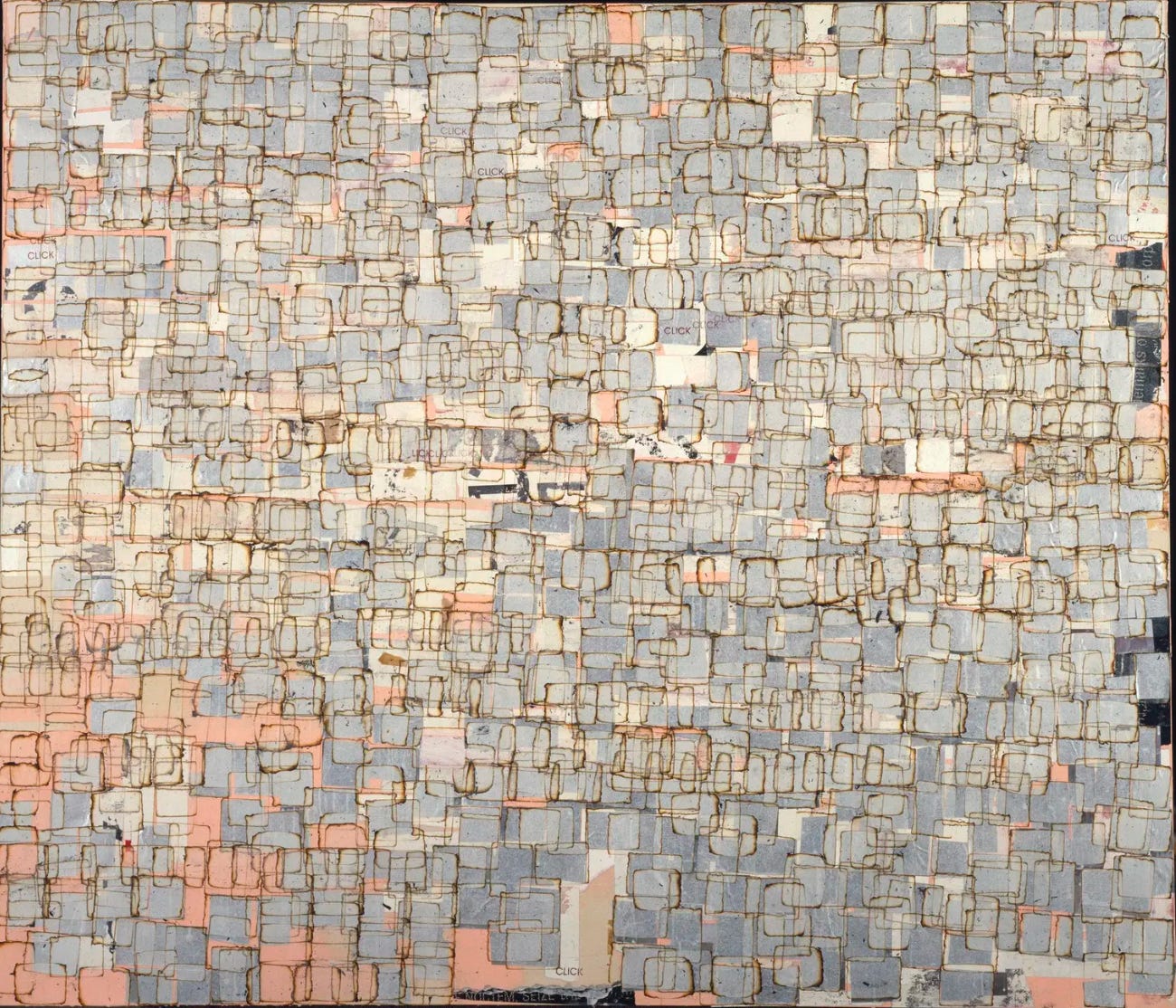
Another example is Mark Bradford. Before attending art school, Bradford spent many years working in his mother’s beauty salon in Los Angeles. He did not begin his formal art career until his thirties, yet he has frequently spoken about how the salon environment shaped his artistic sensibility. There he learned techniques of layering, wrapping, bleaching, dyeing, and manipulating materials, while becoming attuned to the social and cultural dynamics embedded in beauty culture.
Many commentators have noted that salon materials—end papers used for permanent-wave treatments, beauty-shop ephemera, merchant posters, and other supplies—entered directly into his work. More importantly, however, the salon trained his hands and eyes. The dexterity, patience, sensitivity to surface, and layered processes he learned there became integral to his artistic practice.
The latent motif, in this case, is not a memory but a practice. Or, put in another way, the creative process is not an act of recollection but of activation. Experiences may remain dormant for decades before their significance becomes apparent. Artistic practice—and, I would argue, any creative intellectual endeavor—provides the conditions under which those associations emerge and connect to one another. As a professor of mine once told me, it helps to understand “why you do what you do, so you can do it better.”
I would propose calling this process latent motif research: the deliberate effort to identify the experiences, habits, fascinations, skills, environments, and cultural inheritances that quietly shape an artist’s work. If Rilke describes the way memories become “blood within us,” latent motif research seeks to reverse the process, tracing those impulses back to their origins.
The process resembles genealogical research. A genealogist begins with a present-day individual and gradually reconstructs a network of ancestors, migrations, relationships, and historical circumstances that contributed to that person’s existence. Latent motif research proceeds similarly. One begins with a recurring artistic concern—a fascination with records, rituals, disguise, hotels, neighborhoods, archives, games, or stories—and then works backward, searching for its antecedents.
The goal is not to locate a single point of origin. Just as no individual can be explained by a single ancestor, no artistic motif can be explained by a single memory. Rather, one discovers a constellation of influences: childhood experiences, family customs, places of attachment, professional skills, recurring habits, chance encounters, and cultural inheritances. Together they form what might be called a genealogy of attention.
Recent advances in DNA analysis offer a useful analogy. A geneticist may identify traces of distant ancestry that have remained hidden for generations. Likewise, latent motif research seeks to identify overlooked experiences that continue to exert an influence long after their original context has been forgotten. Such motifs are hidden in plain sight—not because they are secret, but because they have become so familiar that they appear natural, inevitable, and therefore invisible.
The artist, in this sense, becomes both creator and genealogist, tracing the lineage of their own obsessions.
If you have followed this column for a while, you may already suspect that many of my recurring subjects are, in fact, my own latent motifs. Growing up in a household of musicians, surrounded by books and vinyl records, goes a long way toward explaining some of the projects I have pursued throughout my career. Yet the most revealing influences are often not the most extraordinary ones. They are the seemingly incidental facts of one’s life that linger unnoticed for years before resurfacing in unexpected ways.
Over time, I have come to realize that many of my projects originated in such overlooked experiences. I have explored my fascination with pharmacies; with hotels such as the Posada Jacarandas in Cuernavaca and the Camino Real in Mexico City; with the neighborhoods and public spaces of that city; with evenings spent watching telenovelas alongside my mother (a pastime made respectable, at least in my mind, by the fact that my uncle Enrique appeared in them); and with my father’s bathroom supply showroom.
Looking back, I can see how the showroom’s display strategies informed my interest in exhibition-making and installation, while the typography and graphic identity of the business helped shape my fascination with institutional language, branding, and corporate aesthetics. Much of my work has consisted of tracing these threads backward and unpacking the personal significance of motifs that were hiding in plain sight, or present but not fully emerged, like that roll of undeveloped film.
Speaking of negative film, I was reminded of this recently during a trip to Mexico City, when I returned to the neighborhood where I grew up. Around the corner stood Foto Hikari, a small photo-development store run by a kind Japanese couple. To my astonishment, the shop was still there. Looking through the window, I saw Mr. Hikari himself, now elderly, still standing behind the counter more than forty years later. He glanced up at me without recognition. I was too shy to introduce myself and, in any case, he would probably not have remembered the boy who regularly stopped by to develop film, make photocopies, or marvel at the mysterious machinery behind the counter.
In the terms I have described, Mr. Hikari is a weak tie. Yet he is also a latent motif: a reminder that some of the most important influences in our lives arrive quietly and without ceremony. Only years later do we realize that our fascination with photography, printmaking, artist books, and mechanical reproduction may have begun in places like that modest neighborhood shop.
As Rilke wrote, “The future enters into us, in order to transform itself in us, long before it happens.”
Beautiful insight