

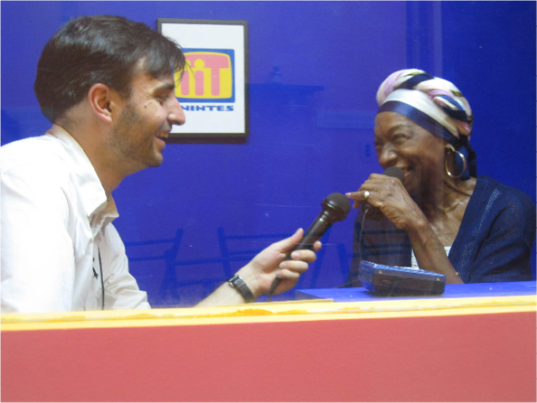
This is the first of three texts written to accompany my participation in the exhibition Telenovela, organized by Aimé Iglesias Lukin at the Americas Society in New York, opening on September 9th, 2026.
Part 1: Give me a Telenovela and I will Give you a Nation
For as long as I can remember, telenovelas were part of the daily rhythm of our household.
They were regarded as a guilty pleasure, consumed largely—at least according to the conventional image—by women: homemakers and domestic workers taking advantage of a lull in the day. In Mexico, the telenovela schedule began after lunch and extended through the evening. Because watching them could hardly be defended as an intellectual activity, they often played in the background while someone sewed, ironed clothes, or folded laundry.


My mother, however, had an excellent excuse: “Va a salir tu tío”—your uncle is going to be on.
The uncle in question was Enrique Lizalde, who devoted much of his acting life, somewhat begrudgingly, to television. His original interests were theater and film, but in the 1960s he became a telenovela heartthrob, starring in the 1966 version of Corazón salvaje. As he aged, he graduated into the father, landowner, and forbidding patriarch, eventually becoming what in Mexico is called a primer actor: a legacy performer whose presence lent authority to a production. With his deep baritone voice and imposing demeanor, he specialized in stern, irascible, emotionally inaccessible men—a kind of Mexican Baron von Trapp.
Whenever my uncle appeared, the telenovela became obligatory family viewing. My first clear memory is Mundo de juguete, rebroadcast on Canal 2 at 6:30 p.m. in 1981, when I was ten. It followed Cristina, a motherless girl at a Catholic school who created an imaginary world while hoping her father would fall in love and give her the mother she longed for. The cast included Sara García—“Mexico’s grandmother”—who spent decades playing maternal figures in Mexican cinema and television.
Its combination of grief, fantasy, and a child’s determination to construct an ideal family became a foundational formula of the Mexican children’s telenovela, particularly in the work of the legendary producer Valentín Pimstein. The presence of a child protagonist probably spoke to the private magical worlds I was constructing at that age. The formula made an even deeper impression with Chispita, which began airing in 1982. Its protagonist, played by Lucero—then Lucerito—was almost exactly my age, and I had a crush on her.
Once again, a child searched for her mother, presumed dead but actually suffering from amnesia after the accident that killed her husband. Uncle Enrique played Alejandro de la Mora, a wealthy widower who brings Chispita into his home to revive his own grieving daughter, then inevitably falls in love with Chispita’s mother. He embodied the familiar archetype of the guarded widower whose paternal tenderness is awakened by a spirited child. Again, a bereaved girl enters a damaged household and reorganizes it, through innocence and sheer narrative force, into the family she desires.
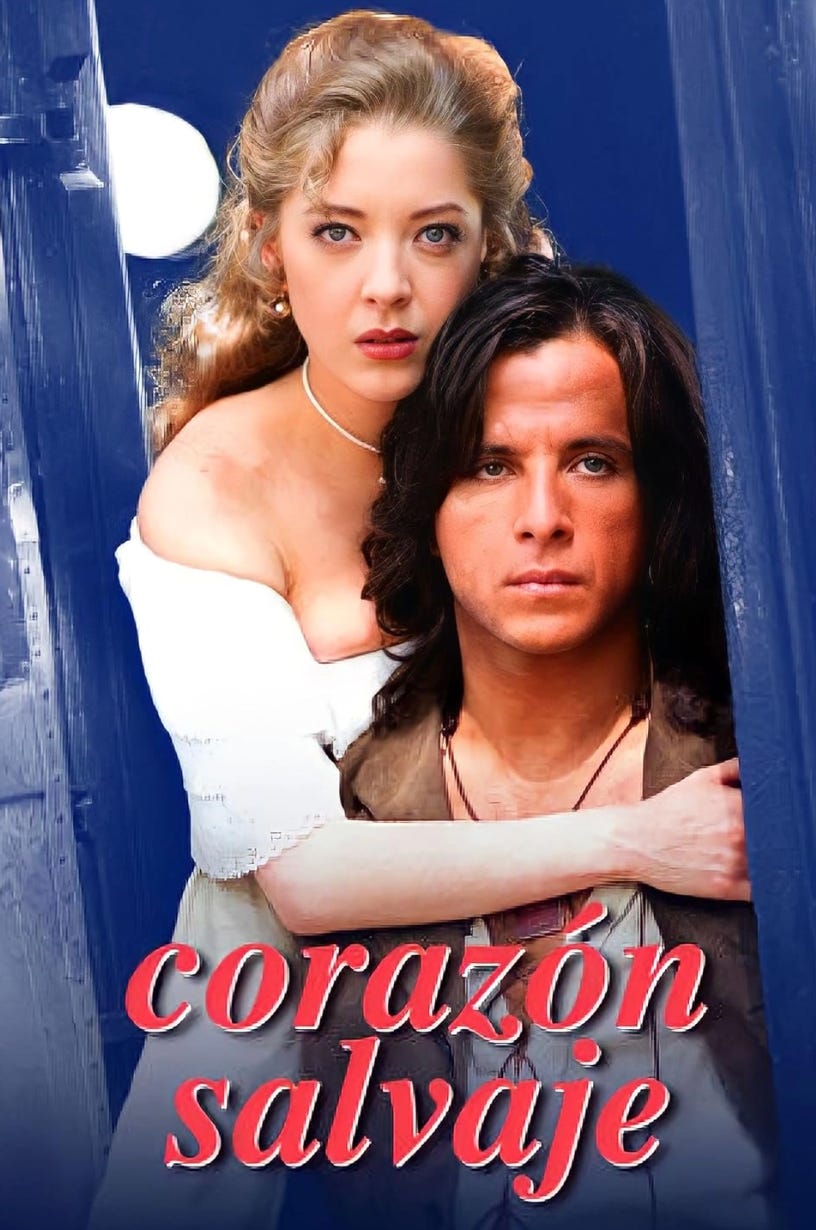
After we emigrated to Chicago, seeing Enrique on television became a way to stay connected to family and country. In the celebrated 1993 remake of Corazón salvaje, starring Eduardo Palomo and Edith González, he played Noel Mancera, lawyer and surrogate father to Juan del Diablo. In Esmeralda (1997), he was Don Rodolfo Peñarreal, an authoritarian hacienda owner obsessed with producing a male heir. Unbeknownst to him, the impoverished blind woman he rejects as unworthy of his adopted son is his biological daughter.
I did not think much about these stories, much less consider them in relation to art, until 2001, when I was visiting Croatia. On a train along the Adriatic coast, I began talking with a fifteen-year-old Bosnian girl. When she learned I was Mexican, her face lit up: “My favorite actress is Jacqueline Andere!” She rattled off Mexican actors with a level of detail that left me astonished, displaying the kind of knowledge one might expect from a tortilla vendor in Mexico City’s Colonia Doctores.
“How can you know so much about Mexican telenovelas?” I asked.
“I watch them every afternoon with my friends. We love them, and we’re learning Spanish. What is Coyoacán like? It looks lovely in one of the series.” When we said goodbye she added: “you are so lucky to be from a country with such great artists.”
Not long afterward, in Zagreb, visiting a friend’s house, I noticed they were watching Esmeralda. There, on the screen, was Uncle Enrique, dubbed into Croatian.
Curious, I began researching the relationship between soap operas and Eastern Europe. In the summer of 1992, following the collapse of the Soviet Union, state television needed an inexpensive way to fill airtime once occupied by official programming. Russia’s Ostankino channel acquired Los ricos también lloran (The Rich Also Cry), a Mexican telenovela from the late 1970s starring Verónica Castro and Rogelio Guerra. It followed a classic melodramatic formula: a working-class woman falls in love with a millionaire’s son and, after 249 episodes of obstacles produced by class and racial divisions, finally marries him.
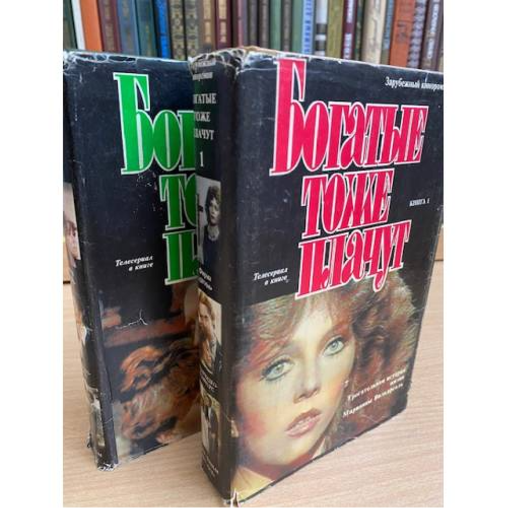
Broadcast as Bogatye tozhe plachut, it received a low-budget voice-over in which the original actors remained audible beneath Russian interpreters. Its producers anticipated popularity, but not mass obsession. The dated hairstyles did not matter: Verónica Castro’s tear-filled green eyes became the most famous eyes in Russia, and cities reportedly came to a standstill at broadcast time. The final episode became an occasion of collective mourning, watched by an estimated 200 million people across the former Soviet broadcast sphere.
Its success helped inaugurate a decade of telenovela globalization, benefiting television giants in Mexico, Venezuela, and Brazil. Televisa sold rights to countries as different as Israel and the Philippines. The industry increasingly developed stories for global circulation, often favoring exotic nineteenth-century haciendas over more narrowly local settings.
What fascinated me was the paradox: the more formulaic and portable these narratives became, the more readily viewers seemed to experience them as intimate and culturally specific. The same switched babies, concealed inheritances, impossible romances, and belated recognitions could be transplanted from one national setting to another. Yet every adaptation exposed local anxieties about race, class, gender, family, and social mobility. The telenovela was simultaneously standardized merchandise and a national psychological portrait.
During that trip I decided to investigate how a commercial product rooted in local conventions could generate such international devotion. Unaware that Nicolas Bourriaud was then promoting relational aesthetics, I founded the Instituto de la Telenovela: part research institute, part nomadic installation, and part serialized drama. It would establish offices in countries where Latin American telenovelas had made a particular impact, using exhibitions and programs to generate critical debate about the phenomenon.
Fundación Televisa gave me access to its archive on Avenida Chapultepec. In Mexico, three figures were central to the telenovela’s development: Emilio Azcárraga, Ernesto Alonso, and Valentín Pimstein. Azcárraga established its commercial model and expanded Mexican television’s global reach; Alonso and Pimstein helped shape its modern dramatic structure. Pimstein, a Chilean immigrant, reportedly visited markets to solicit viewers’ opinions and used audience responses to determine how stories should unfold. One of his most famous sayings was: “If we don’t do it this way, my maid won’t understand it.”
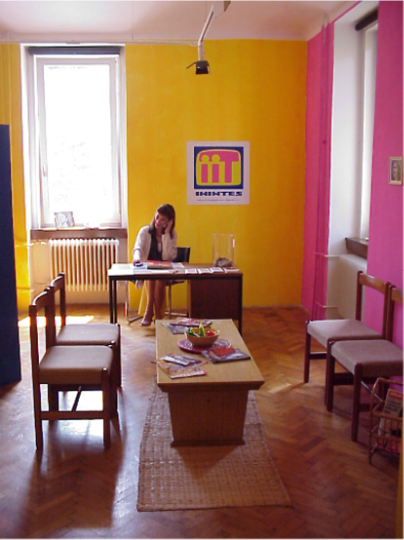
The Institute first opened in Ljubljana, Slovenia, in 2002, at Galerija P74, a space run by artist Tadej Pogačar. Against the city’s palette of ochers and Socialist-era grays, I created a telenovela interior drawing on Luis Barragán’s Mexican modernism: pinks, blues, and yellows reminiscent of the Camino Real Hotel. One visitor, I later learned, painted his house in the same colors. Telenovelas were hardly unfamiliar there: shortly before, Leticia Calderón, the star of Esmeralda, had been greeted by approximately a thousand people at the airport—an extraordinary number in such a small country.
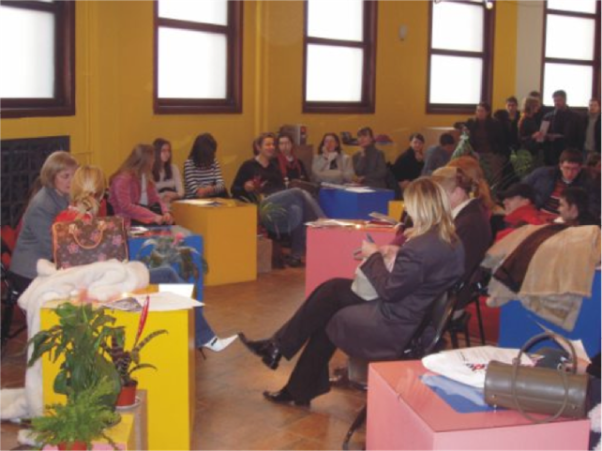
In Zagreb, the climate was particularly adept for this project. The Croatian magazine Gloria was practically devoted to Latin American telenovelas. It interviewed Mexican actors in their homes in Las Lomas or San Ángel much as Vanity Fair might profile Hollywood stars. This was not simply imported entertainment but an alternate geography of celebrity: Mexican neighborhoods, accents, interiors, and actors had become familiar reference points thousands of miles away.
Taking place at the HDLU center in Zagreb, a contemporary art gallery, the institute took the form of a Telenovela Bar, whose tables doubled as exhibition vitrines and which quickly became a center of sociability. A local artist proposed a workshop. I expected ten participants; nearly one hundred arrived, along with television crews. The audience combined middle-aged homemakers and conceptual artists—one of the strangest mixtures I had encountered. Yet the conversation was revelatory. The homemakers were specialists, perfectly capable of debating the form’s sociological dimensions.
I began to notice patterns in how countries related to telenovelas, and how those relationships revealed something about each nation. Canadian writer Denise Bombardier summarized this with the phrase: “Give me a soap opera and I will give you a nation.” Critic Tomás López-Pumarejo, the institute’s principal theorist, described the form as “the drama of self-recognition”: stories organized around ontological questions—Where is my child? Where is my true love?

Telenovelas convert social tensions into collective therapy. This was particularly resonant in societies emerging from Communism and renegotiating taboos around class. An impossible love divided by wealth could be more recognizable than the problems of the oil millionaires in Dallas or Dynasty. American production values mattered less than heightened drama, visible emotion, and the allure of an exotic elsewhere.
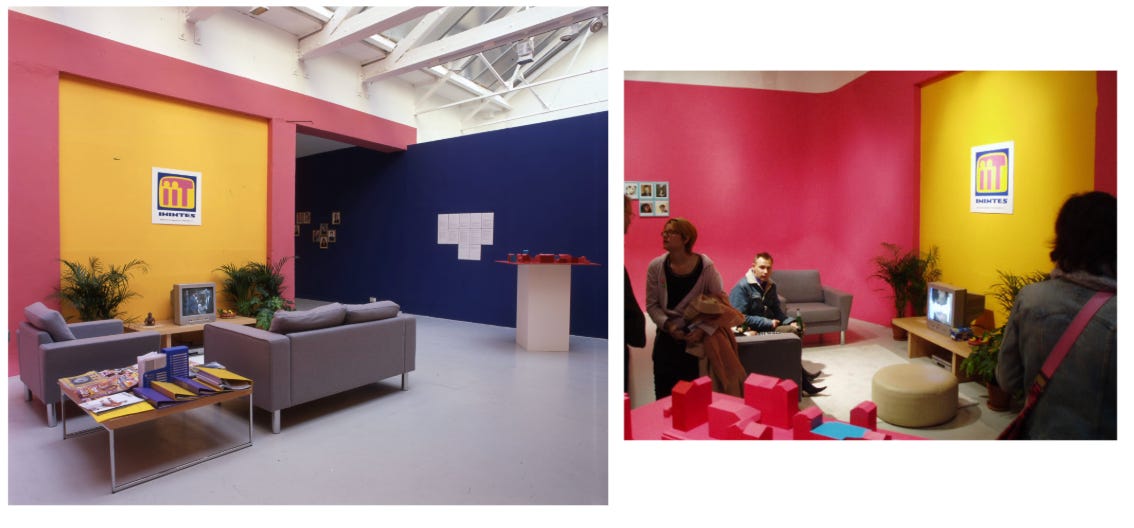
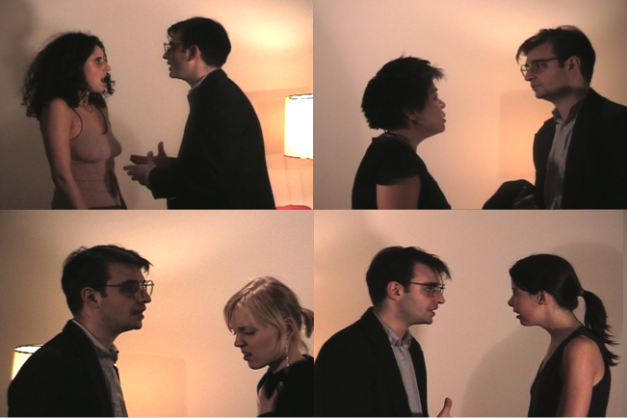
The form’s persuasive force is embedded in its commercial origins. Radio serials sponsored by detergent companies gradually expanded their advertising narratives into programs, while keeping soap as the leitmotif of the action—hence “soap opera.” Their psychological power is well documented. Simplemente María, about a domestic worker who advances through sewing and night school, reportedly prompted a surge in sewing-machine sales in Peru. Blond heroines increased sales of blond hair dye; Russian children were named after telenovela characters; and in Hungary, Esmeralda inspired a fund to combat blindness.
The same influence has supported educational campaigns about AIDS and drug addiction. Yet the telenovela remains a commercial product, beholden to commercial rather than altruistic interests. Televisa’s alliance with Mexico’s Institutional Revolutionary Party produced lucrative, politically innocuous programming, particularly during moments of national tension. Perhaps the most effective commercial vehicle ever invented, the telenovela can also become a potent instrument of demagoguery.
One of the institute’s final stops was Cuba, where radio storytelling flourished in the 1940s and provided a foundation for the Latin American telenovela. El derecho de nacer, about a white man raised by a Black woman and searching for his biological mother, brought questions of race and illegitimacy to audiences across the continent and became one of the genre’s most frequently remade stories.
Cuba’s early embrace of the form was inseparable from its rich radio culture and unusually high concentration of television sets in the 1950s. The telenovela’s defining themes—hidden ancestry, racial hierarchy, family honor, and the search for a missing parent—could emerge from Cuban social history and still travel almost effortlessly throughout Latin America.
When we opened the institute’s Cuban office, television crews interviewed us; the next day we were famous in Old Havana. With limited state programming, the telenovela remained entertainment par excellence. Political criticism was largely absent, although imported productions occasionally introduced it indirectly. In one episode of Colombia’s Yo soy Betty, la fea, Betty criticized the finance minister; the following day, newspapers analyzed her remarks as if she were a national political figure.

In its various iterations—including London, where we produced Los del Este, a telenovela reinterpretation of the British soap EastEnders whose title also referenced the genre’s influence in the Eastern Bloc, and, finally, Mexico City—the Institute became both an early experiment in what would later be called socially engaged art and an exploration of an idea that I found particularly exciting: introducing a discursive and interpretive framework into a specific local context and allowing it to unfold and expand through its encounter with that place, its history, and its audiences.
Of course, Telenovelas have continued to evolve, incorporating new formats and subjects ranging from cloning to September 11. Enrique appeared on television less frequently and, perhaps like him, I entered a kind of semiretirement from the subject and moved onto other topics.
But, as always happens in the world of telenovelas, there remained the possibility of a sequel—or a remake.
I think you've only seen a part of it, having not been on the receptive side of the telenovela influx in the post wall cracking times when it started. I quite vividly remember those times because part of my childhood was grounded in the similar-ish rituals, but if your externally imposed ritualistic premise for watching it all was the geniture proximity, ours were just a slice of the otherness of life, a window to the world. In absence of other windows, that was at least one.
After soviet curtains fell, certain cultural, cognitive, perceptual vacuums occured on the territories and in the mental and spiritual spaces that were under curtains previously; people lacked models of how to deal with life on the ground after culture shocks of state upheaval, and Simplemente María, Café con aroma de mujer, Dynasty too for the dreams of grandeur already realised on screen but still thought about by the audience, and so on -- they all had been filling the meaning-shaped hole of the modus vivendi of many people. Very often I've heard kitchen table arguments, that were quite heated, for and against actions taken by the characters of the telenovelas as if they were brothers, sisters, husbands, friends. Apart from the screen, friendly people could take it to disliking one another based on which antagonistic characters of their favorite series they privately allied with.
Therapy is the wrong frame, though, a sort of inversion, frankly, as if the viewers were admitted and the screens gave them treatments to their diagnoses. It's not that the anxieties of any kind were exposed that much culturally, even if they were on convivial stratum; some addressed it in becoming businessmen, gangsters for real, and some did not; it's that the temperament of engagement and manner of dealing with these anxieties became aspirational where they were previously pressurized at the time. You can call it therapy of a kind, but for people who didn't know what that is at all, it was an extended circle of friends, rivals, and long episodes of, perhaps, self-actualization too. Not compartmentalized like a time slot in a booked visit to a calendar appointment; a real slice of lived and felt life, quite never anything too exotic, anything borderline other, but perceived as something so relatable that it became an indispensable part of the life's wholeness at the time.